BIO 102 MENU
syllabus 
1 - origin
2 - biomol.
3 - biomol2
4 - viruses
5 - prokaryon
6 - endosym
7 - eukaryon
8 - energy
9 - mitosis
10 - meiosis
11 - reprod
12 - genetics
13 - humgene
14 - humge2
15 - evolution
16 - evolutio2
17 - diversity
18 - diversi2
19 - tissues
20 -digestive
21 - respirat
22 - circul
23 - excret
24 - endocr
25 - receptors
26 - nervsys
Quizzes
Bio 103 Lab
(full title of lecture appears in status bar on the top or at the bottom of your window)





Biology 102 - General Biology
Animal Structure and Function
Excretory System
The need for homeostasis (constant internal environment)
Excretory organs such as our kidneys, supplemented by other organs and tissues, are responsible for maintaining the constant internal environment. The constant composition of body fluids is necessary for cellular functioning. Cells require a constant environment. The cell's enzymes can function only within a limited range of pH. Enzymes also need specific inorganic ions as cofactors. Cells require a constant concentration of water and cannot tolerate high concentrations of toxic molecules.
It is the job of excretory organs to remove excess water, inorganic ions and toxic molecules or retain water, inorganic ions and nutrients. They accomplish this by a process of selective filtering and processing of the body fluids. The excretory organs function in the elimination of wastes, osmotic regulation, ionic regulation and the retention of useful organic molecules
The excretory organs consisting of tubules are in close association with body fluids or blood vessels. Although the fluid in the initial part of the tubules is almost identical to the body fluid, the final composition of urine is vastly different. The exact composition or urine depends upon the diet and the environment of the adult and embryo.
Two of the metabolic products which must be eliminated from the body are CO2 and excess nitrogen. CO2 is produced during cellular respiration and we have previously discussed this when we discussed gas exchange in the respiratory organs (e.g., our lungs) and how they rid the body of this toxic gas. Excess nitrogen comes from protein. The bulk of protein is used as an energy source so the amino group must be removed so the remainder of the molecule can enter the Krebs Cycle. Most animals excrete the excess nitrogen in one of the following forms: ammonium ion (NH4+), urea (NH2)2-C=O or the more complex purine-related molecule, uric acid. These molecules are synthesized mainly in the liver and some in the kidneys. The ATP cost is greatest for uric acid with ammonium ion being the cheapest. So why do some animals pay more to excrete their excess nitrogen?
EXCESS NITROGEN IS EXCRETED BY ALL ANIMALS BUT EACH CHOOSES THE MOLECULE BEST SUITED TO THEIR NEEDS
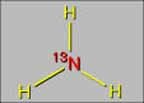
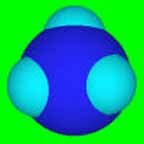
AMMONIA-THE SIMPLEST BUT MOST TOXIC MOLECULE FOR EXCRETING EXCESS NITROGEN
USED BY AQUATIC ANIMALS BECAUSE WATER CAN DILUTE IT AWAY
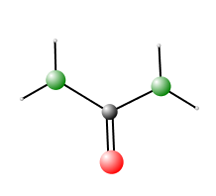
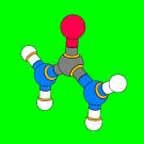
UREA IS WHAT MAMMALS USE- IT IS SOMEWHAT MORE COMPLEX THAN AMMONIA
URIC ACID IS USED BY ANIMALS THAT LAY EGGS
It is the least toxic of the 3 molecules. It precipitates out of solution in the egg thus it does not harm the developing embryo
Should we excrete ammonia, urea or uric acid to get rid of the extra ammonia?
There is a direct correlation between the principal excretory product and the availability of water in the habitat of the adult or the embryo of the organism. This is better understood by examining the properties of the three molecules and the needs of the adult or embryo. The ammonium ion is very toxic and very soluble. It requires large quantities of water to keep it in dilute solution. Hence it is the primary form of nitrogen excretion only in aquatic animals, both invertebrates and vertebrates. It can escape through the body surface and gills as well as kidneys.
Terrestrial animals are in constant danger of water loss and cannot afford the loss of large quantities of water or dilute the ammonium ion. They have adopted urea or uric acid as their major nitrogen end product.
Birds, reptiles and insects form uric acid. It is non toxic and precipitates out of solution leaving water free to be reabsorbed. It is left as a white paste with a minimum of water loss. The choice of uric acids probably related to the type of egg they lay. Their eggs are relatively impermeable to water. As the embryo oxidizes amino acids as an energy source, the ammonia liberated would be quite toxic if allowed to accumulate. Uric acid, which is quite insoluble in water is retained, in the egg, as a solid, nontoxic material. Urea, like uric acid, is not toxic but it is quite soluble in water. Its accumulation inside a water-impermeable egg would have serious osmotic consequences. Guano is mostly uric acid.
People make some uric acid and those individuals with gout make an excess of uric acid which accumulates in their joints, particularly the big toes!
In mammals, urea is the principal vehicle of nitrogen excretion. The urea of the embryo is released into the maternal circulation. Urea is also used by semi-aquatic animals (amphibians) like the frog. When living on land the frog excretes primarily urea. When in the water, it excretes primarily ammonium ions.
To summarize, as a rough guide, one can say that most fully aquatic animals excrete ammonium ions and most terrestrial ones excrete urea. The exceptions are those which lay eggs with shells impermeable to water and they excrete uric acid both as an embryo and as an adult.
Osmotic Regulation
A second function of the excretory system is osmotic regulation. Most marine invertebrates have little power of osmotic regulation. Small changes are tolerated and are reflected by changes in the concentration of body fluids. However, a few can maintain a constant internal salt concentration by actively transporting salt into or out of the body.
The problem for marine vertebrates is that their body fluids have less dissolved salts than the sea water in which they live. Therefore, water tends to be lost through the body surface and gills. When they drink the water with the dissolved salts they then must actively transport the salt out via salt glands in the gills, head, eye, rectal gland or kidney. Cartilaginous fish such as the sharks, skates and rays retain urea in their blood so that their body fluids are at osmotic equilibrium with the sea water in which they live. (This is why sharks must be soaked a long time before they can be eaten to leach out the urea.
Fresh water invertebrates and vertebrates have a greater salt concentration in their body than in their surrounding medium. If they have a permeable skin, water tends to enter the body and salt tends to be lost from the body. All of them have a mechanism for actively transporting salt into the body. In fish salt is transported in through cells in the gill. Frogs use their skin and the cells of the walls of their bladder. These vertebrates also eliminate excess water through their kidneys. Salmon, fish who can live both in fresh and salt water, can reverse the process so that they can either transport salt into the body or transport it out depending on their needs.
Dehydration is a major problem for terrestrial organisms. Many of their organs cooperate to conserve water. They have an impermeable skin, an internal respiratory organ, a digestive tract that reabsorbs water from the food and a kidney that regulates water loss as well as regulating the molecular composition of the blood. And, as previously noted, their choice of the molecule to use to eliminate excess nitrogen economizes on water, also.
Excretory organs
The excretory organs are in most cases responsible for regulating the volume and composition of body fluids. They do this by selective filtering. They operate in close association with the body fluids or blood vessels from which the body fluid is passed along tubules. The cells of the tubules reabsorb needed molecules and reject unneeded molecules. This discrimination is usually accomplished by active transport by the tubule cells. This requires a lot of ATP. The final fluid formed by the excretory organ is called urine.
Most excretory organs are assisted in their regulatory functions by other tissues and organs as previously noted. The body covering and gills assist in the elimination of wastes and the elimination or absorption of salts and water. Specialized glands and the digestive tract also can play a role in the elimination or absorption of salt and water.
Individual excretory tubules are called nephridia or nephrons. When collected into a compact organ they form the kidney. Flatworms have a system of tubules scattered throughout their body. They are all interconnected and lead to several external pores. The tubules have a ciliated flame cell at one end which maintains a current. Annelids have ciliated funnel-shaped nephridia which opens to the exterior. Mollusks and arthropods have similar nephridia but they are concentrated into kidneys. Insects have Malpighian tubules which are blind at one end and which ramify throughout their bodies. These tubule cells form uric acid and water is salvaged in the insect gut.


MAMMALIAN KIDNEY WITH INSET OF NEPHRON AND ENLARGED PICTURE OF A NEPHRON
There are thousands of nephrons working in each of your kidneys
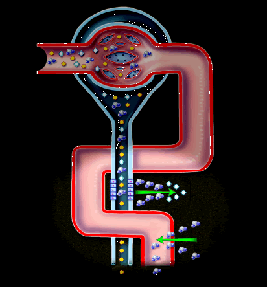
DIAGRAM OF HOW THE NEPHRON FUNCTIONS
Vertebrate kidneys have individual units called nephrons. The collection of nephrons constitutes the kidney. The urine formed by the kidney is collected and sent down the ureter to the urinary bladder. The bladder is lined by an interesting transitional epithelium which allows it to expand so that the urine can be stored. Urine is released by the bladder into the urethra, the tube which leads to the exterior.
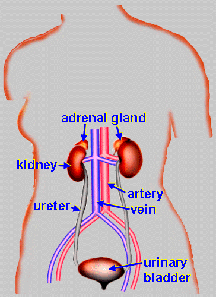
In mammalian males, the urethra also ties into the genital tract and sperm travel down the urethra also. However, there are controls that allow one or the other....urine OR sperm...to be released at any one time. The urinary and genital systems are often called the urogenital tract. Men go to an urologist for problems of either the urinary or the genital tract. Embryologically, the two systems develop in close association with the gonads using some of the "early embryonic plumbing" abandoned for different structures later in development. The mammalian embryo has three different kidney structures as it goes through embryogenesis and fetal development (the pronephros, mesonephros, and, finally, the metanephros). The urogenital system development continues after birth. For example, owners are encouraged to postpone neutering of male kittens until after four months when the urinary system is complete.
In mammals, which are similar to other complex vertebrates, the renal artery branches into smaller vessels and finally into a capillary tuft called the glomerulus at the entry to each nephron. The cup-like structure at the beginning of the nephron is called Bowmans capsule. The renal arterioles branch into the glomerular tuft within this capsule. From the glomerular capillaries the blood is filtered....proteins and cells are retained, whereas water and all smaller dissolved molecules pass into the tubule. The fluid at the beginning of the kidney tubule is blood minus the cells and larger protein molecules. If there is blood in your urine, you know you have a problem. The tubule cells of the nephron then process this filtrate to form urine (excretion). This is done by a selective process involving active transport and the utilization of a lot of ATP. Nutrients are reabsorbed by the cells lining the nephron and water is reabsorbed as needed. Waste products such as urea are not reabsorbed. The arteriole that entered Bowmans capsule loops back around the nephron and the reabsorbed molecules enter that vessel to be taken back into general circulation. The composition of urine depends on what one has eaten recently, how much water one has taken in, and ones state of health. So while the composition of the urine varies, the constancy of the blood is maintained. This is the whole purpose of the excretory system.
When a person is put on dialysis, their blood is sent through a filter that does not allow proteins or cells to be lost but all small molecules, both nutrients as well as the waste molecules are lost. The nutrients, including the ions lost, must be replaced.
