BIO 102 MENU
syllabus 
1 - origin
2 - biomol.
3 - biomol2
4 - viruses
5 - prokaryon
6 - endosym
7 - eukaryon
8 - energy
9 - mitosis
10 - meiosis
11 - reprod
12 - genetics
13 - humgene
14 - humge2
15 - evolution
16 - evolutio2
17 - diversity
18 - diversi2
19 - tissues
20 -digestive
21 - respirat
22 - circul
23 - excret
24 - endocr
25 - receptors
26 - nervsys
Quizzes
Bio 103 Lab
(full title of lecture appears in status bar on the top or at the bottom of your window)





Biology 102 - General Biology
The Diversity of Life II
The Animal Kingdom
The organisms that are included in the Animal Kingdom do not possess chlorophyll, they are, with a few exceptions, capable of locomotion or body movement by means of contracting fibers and are multicellular. There are many different phyla (sing., phylum) and we will not discuss them all. We will start with the most primitive and work our way up to the most complex, noting along the way those phyla which have made specific advances over their simpler predecessors. The major changes include moving from radial symmetry to bilateral symmetry which is accompanied by gaining a head (where the sense organs and neurons congregate). As we shall see, "you must have a head to get ahead." Other advances include moving from the tissue to the organ level of organization; acquiring a "one-way" digestive tract with a mouth and an anus; the development of segments and specialization of the segments; and the development of adaptations to land living (among other advances we will not go into).
Phylum Porifera
The simplest animals are the sponges or Porifera. They spend their life anchored to rock or other solid surfaces under water. Most live in the ocean but some live in fresh water. Their body is perforated with small openings or pores from which they derive their name. They feed by drawing water in through the pores and filtering out tiny food particles and the filtered water is discharged through the "top."
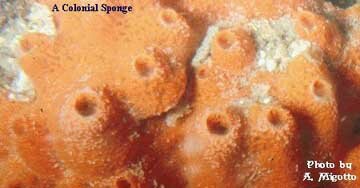
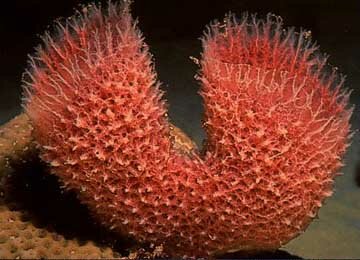
Sponges have two layers of cells and the inner layer which is flagellated sets up the water current and consumes the filtered food particles. The shape is maintained by a skeleton of either spicules (silica or calcium carbonate) or spongin. They reproduce sexually and the small, free-swimming larvae swim away to settle down in a new spot. Fossil sponges have been found and are known to be one of the earliest forms of animal life. They are so different from other animals that they have been put in their own subkingdom, Parazoa, by some taxonomists.
Phylum Cnidaria
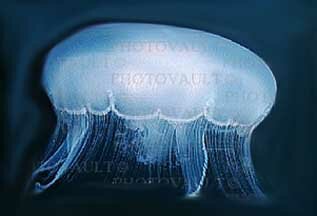
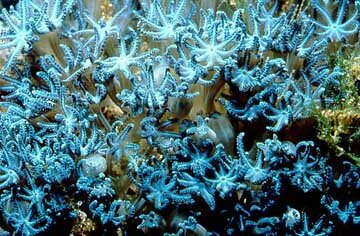
All the organisms in the phylum Cnidaria have cnidoblasts, cells with a poison-filled barbed thread called the nematocyst. With these nematocysts they trap and paralyze prey. They have radial symmetry and they have two layers of cells with a rudimentary middle layer. They have one of two basic body plans both of which are radially symmetrical, the medusa and polyp (an upside down medusa). The jellyfish is a medusa and a sea anemone is a polyp. There is a single opening where the water with food comes in and the remains go out. The food is digested by digestive enzymes released by the innermost layer of cells. Many cnidaria such as the corals which form reefs and atolls in tropical waters, are colonial.
Phylum Platyhelminthes (Flatworms)
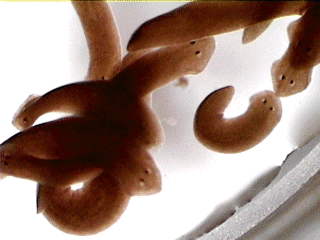
Platyhelminthes are also called flatworms. They are the first animals with bilateral symmetry which is associated with active locomotion and a concentration of sense organs at the anterior end of the animal. They, and all more complex animals, form tissues, organs, and organ systems. Planaria, a fresh water flatworm, has light, touch and vibration receptors at its head end....the end that meets changes in the environment first. Another advance in this phylum is that there are three layers of cells: an ectoderm or outer layer, the mesoderm which is the middle layer which forms the organs, and the endoderm which lines the gut. The digestive tract is sac-like with only one opening for entry and exit like the Cnidaria. The mouth is on the ventral surface (underneath). Tapeworms and flukes are parasitic members of this phylum. Tapeworms have adapted to their parasitic way of life so completely that they do not need a gut and just absorb food into their body from the intestine of the host. They have no sense organs, and consist of a ribbon of multiple proglottids which contain ovaries and testes. These proglottids are released from one host to be picked up and eaten by a second host.
Phylum Nematodes (Roundworms)
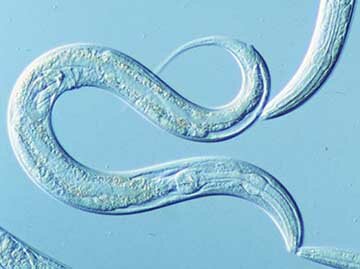
The round worms or nematodes live practically everywhere. They have only longitudinal muscles and so have a characteristic whip-like motion. Most are free-living and some such as the hook worm are parasitic. It has been said that if you dissolved away everything in the world except the nematodes, you would still have a ghost-like outline of the world from the nematodes contained in both the living and nonliving things. The major advance found in the nematodes is the acquisition of a one-way digestive tract. The food enters at the mouth, is processed and absorbed, and the remains are eliminated via an anus...a much more efficient system. When your child or dog has "worms" they are usually nematodes (although they could be tapeworms). These are pinworms, whip worms and Ascaris. The religious ban on pork probably originated from infections of humans by the nematode, Trichinella spirali. Undercooked pork is the source of these infections. I had a patient recently who had seizures due to a worm infection in her brain. Elephantiasis is caused by an infection of a round worm which invades the lymphatic vessels. When the lymph cannot flow, it accumulates. The result is gross deformity of such body parts as the leg. Nematodes also cause great damage to crops such as oranges, tobacco and strawberries. Within the past decade much biological research has been done on Caenorhabditis elegans, a nematode, and its genome has been sequenced. This organism, with which we share many genes, is helping to elucidate the genetic mechanisms of many human disorders, human embryonic development, and human aging. Like all nematodes, it has a fixed albeit small number of cells. Following the fate of each cell has facilitated the study of developmental processes in all organisms. The Nobel Prize in 2002 was given to the three scientists who did the initial studies in this worm and who discovered the existence of programmed cell death, apoptosis, which is now known to be a universal phenomenon in all animals.
Phylum Rotifera
I mentioned the rotifers because they are common in the pond water that one can look at in a lab microscope. These multicellular, multi organ rotifers are no bigger than many of the unicellular Protozoa and algae also seen in the pond water.

Phylum Mollusca
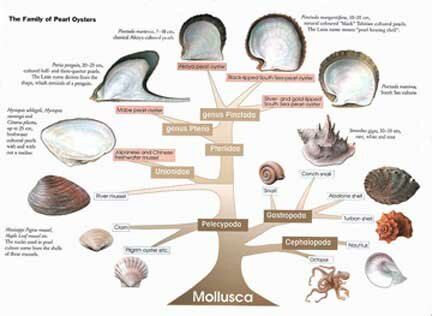
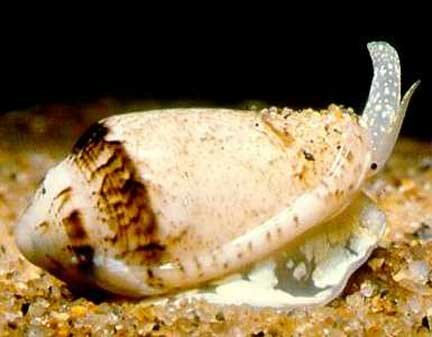
Most members of the phylum Mollusca live in salt water but some live in fresh water and a few live on land. They have sophisticated organ systems, most are soft-bodied and many have a shell (exoskeleton). There are four common groups with which you may be familiar. 1. The bivalves include the clams, oysters, mussels, and scallops. 2. The gastropods (stomach footed) which are univalves, are the snails, limpets, and land and sea slugs. 3. The cephalopods (head footed) include the squid, octopus and chambered nautilus. They have arrived at an image forming eye with a lens which is similar to the eyes of vertebrates. Their eye is an example of convergent evolution since embryonic development of the vertebrate and cephalopod eye are different from one another. The cephalopods are the most complex group of the mollusks and include the largest of all the invertebrates. There have been reports of a 28-foot octopus and a 50-foot squid. Only the chambered nautilus in this group has a shell. 4. Another group of mollusks is the chitons. They are the only group which is segmented and are, therefore, closely related to the annelids.
The Annelid-Arthropod Line
There are two major branches in the animal "tree": the annelid-arthropod line and the echinoderm-chordate line to which we belong.
Phylum Annelida (Segmented worms)
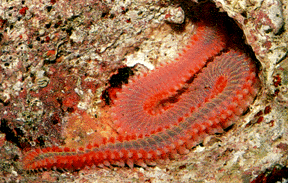
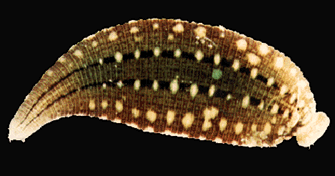
The first time we see segmentation among the animals is in the annelids, otherwise known as segmented worms. Annelids are bilaterally symmetrical, have a good circulatory system of blood vessels, and a rather elaborate nervous system. The relatedness of the annelids and arthropods is evidenced by the similarity of the larval insects (arthropods) such as the caterpillar to the segmented worms. The best-known annelid is the earth worm which carries out the necessary job of continual mixing of the soil (this was first pointed out by Charles Darwin). Most segmented worms are marine worms which live in tubes and burrows along the coastline. The leeches are parasitic annelids which at one time were used for "blood letting" which was thought to be of therapeutic value for a variety of ailments.
Phylum Arthropoda (Jointed Legs)
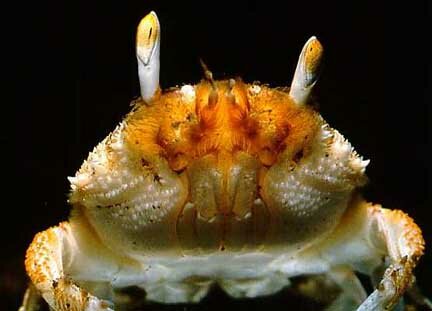
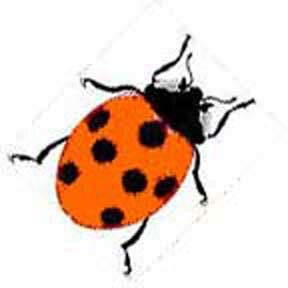
The Phylum Arthropods (joint footed) has the largest number of species of any group. They are found everywhere....in fresh and salt water, tropics and antarctica, mountains and deserts. Arthropods include truly land living animals. They are segmented and have exoskeletons made primarily of chiton, a polysaccharide. They are bilaterally symmetrical and their appendages are specialized for a variety of functions. Unlike the other phyla, they have a well-differentiated head, thorax and abdomen. The five main groups are the centipedes, the millipedes, the crustacea (crayfish, lobsters, barnacles, crabs, pill bugs, shrimps), the arachnids (spiders, mites, ticks, scorpions, limulus), and the insects. One handicap of having an exoskeleton is the need to shed it to grow. When the exoskeleton is shed, the organism is very vulnerable. The Maryland soft-shelled crab which is molting is considered a delicacy (frankly, I never developed a taste for them).
The Annelid-Arthropod Link
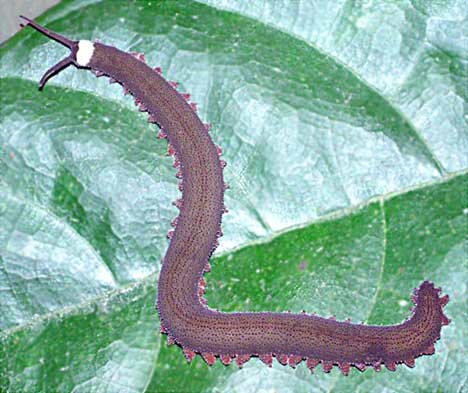
There is a tiny phylum which contains some worm-like organisms called Peripatus which is found in tropical regions and has features of both annelid worms and insects. It is a little changed descendant of an organism that was also the common ancestor of both the arthropods and annelids.
The Echinoderm-Chordate Line
Phylum Echinodermata (Spiny skin)
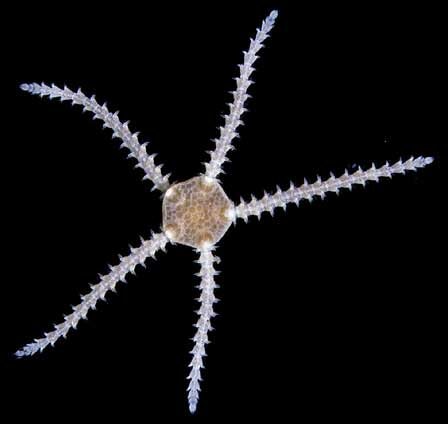
The echinoderms (spiny skin) are our closest invertebrate relatives. These creatures have reverted to radial symmetry with limited ability to travel and they have regenerative powers. If you cut off the arm of a starfish, it can regenerate the arm. Sea cucumbers will eviscerate themselves (turn themselves inside out) if attacked by a predator and then regenerate their internal organs. They have an endoskeleton and organ systems including a system of sucker-like tube feet. This group includes the starfish, sea urchins, sea cucumbers, and brittle stars.

Phylum Chordata
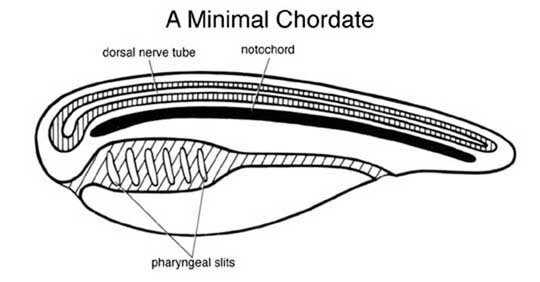
The phylum to which we belong is Chordata. There are invertebrate members of this phylum as well as vertebrates. They are all bilaterally symmetrical with some degree of segmentation and they have an internal skeleton. Their unique characteristics include (1) a dorsal hollow nerve cord (most other animals have a ventral nerve cord) above the notochord. At its anterior end, the nerve cord becomes enlarged to form the brain. All chordates also have (2) a notochord which is a flexible, rod like structure, dorsal to (above) the digestive tract which provides internal support for the body. The notochord of the vertebrate embryo is replaced by the vertebral column or backbone in the adult. All chordates possess (3) a tail that extends past the anus, and (4) gill pouches at some time in the life cycle. In aquatic chordates, the gill pouches break through to the exterior forming gill slits. These provide an exit for water that is taken in through the mouth and passed over the gills. In the land chordates, the gill pouches are seen in the embryo but do not break through. They become greatly modified during the later course of development to become jaws and other organs. Lungs for gas exchange have developed in the more advanced vertebrates.
Sub-phyla: Urochordata and Cephalochordata (Invertebrate chordates)
The most primitive existing chordates belong to the subphyla, urochordates and cephalochordates. Urochordates are the tunicates. The tunicates are sessile animals that are filter feeders. They look like a small pouch, are often transparent or translucent and have no head. They are named from the tough covering, the tunic, which surrounds their body. Curiously, the tunic contains substantial quantities of cellulose, a substance generally confined to the plant kingdom and some protists. The tunicates are also called sea squirts. Aside from the presence of gill slits, it is hard to see what makes these animals chordates. However, their free-swimming larvae (embryos) are distinctly chordate and look similar to their relatives, the lancelets. The larvae have both a notochord and dorsal nervous system. The lancelets are members of the sub-phylum, cephalochordata. Like the tunicates they are filter feeders but unlike the tunicates, they have a head and burrow into the sand with only their head protruding. They get their name from the fact that they are shaped like a lancelet.
Sub-Phylum Vertebrata
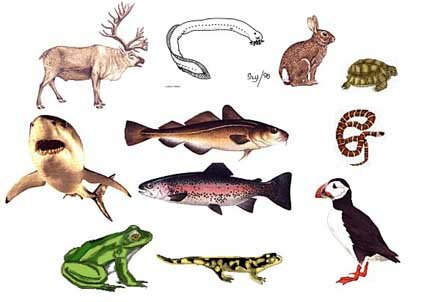
The subphylum, Vertebrata, is the one to which we belong. Also included are the surviving fishes: jawless (Agnatha), cartilaginous (Chondrichthyes), and bony (Osteichthyes). The other classes up the evolutionary ladder are the amphibians, reptiles, birds and mammals.
Class Amphibia
The amphibia evolved from the lobe finned fishes. They are partly aquatic and partly terrestrial. As adults they breathe air and walk on land on four legs, however, body water is easily lost through their moist skin and, as a consequence, they are restricted to damp locations where there is no danger that the body will dry out. Amphibia require fresh water for reproduction (none are marine). The eggs are laid and fertilized in the water and develop into gill-breathing larvae. After the larvae grow they metamorphose into adults which developed paired lungs. This class includes salamanders, frogs and toads.
Class Reptilia
The class Reptilia is currently represented by turtles, snakes and lizards, crocodiles and alligators. Reptiles are fully adapted to life on land. In addition to lungs and legs, they have a dry, scaly, waterproof skin which keeps their body from drying out even in desert habitats. They have waterproof eggs with a leathery covering, and, therefore, do not need water for reproduction. They do require internal fertilization and even the aquatic reptiles return to land to lay eggs. Fossil remains show that reptiles were once far more numerous and diverse than they are today including flying reptiles and dinosaurs.
Class Aves
The class Aves or birds share several traits with the reptiles from which they evolved. They, like reptiles, lay hard shelled eggs and have internal fertilization. Their legs are covered with scales although the rest of the body is covered with feathers. Like turtles, they have a horny beak and no teeth. The second most conspicuous feature of birds besides feathers is their wings. Their forelimbs are modified for flight.
Class Mammalia
The class Mammalia is the one to which we belong. The unique features of mammals are mammary glands to provide milk for their young and the presence of hair. The young have an extended period of dependency during which they learn from the adults. Not all mammals retain the embryo and fetus inside connected to a placenta as we do. For example, the monotremes are mammals that lay eggs and the marsupials are mammals that give birth to immature young which remain in a special pouch which has mammary glands within it. Mammals have a complex brain with a highly developed cerebral cortex.
